/cdn0.vox-cdn.com/uploads/chorus_image/image/48967871/GettyImages-450131188.0.jpg) |
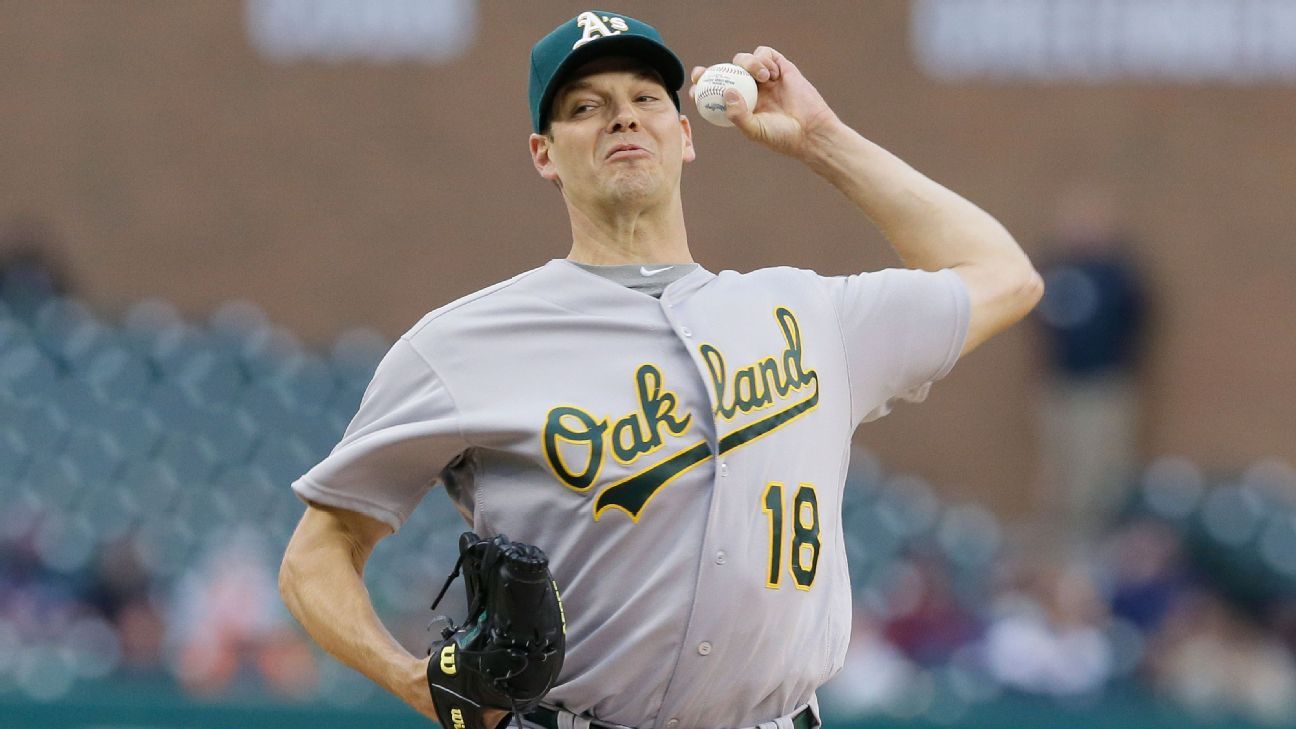
| Rick Schultz, Getty Images |
With the young MLB season underway, fans have been treated to the extraordinary performances by rookies such as Trevor Story, Tyler White, and Ross Stripling. These homegrown ballplayers have all been picked by their organization through the June Amateur Draft, and their production serves as a reminder of the importance of picking well in the Draft. While the annual Amateur Draft is still two months away, I will take an early stab at who will go where in the first round this June.
1-1 Philadelphia Phillies: LHP Jason Groome, Barnegat HS (New Jersey)
 Pros: As polished as high school pitchers get, fastball runs into the mid-90's with a plus curveball and changeup. Has the size, stuff, and command that are head and shoulders above his peers, with great pitchability and clean mechanics.
Cons: High school pitchers are always a risk to be taken first overall, but Groome's polish should make him a safe bet. Has been throwing year round for many years, so injury concerns and overuse may be an issue later on.
MLB Comparison: Fastball/curveball combo with good command and pitchability reminds me of Jon Lester
I wrote more about him in a previous piece here.
 Pros: Tall, strong and athletic, Rutherford is a true 5-tool prospect. He can play really run and play defense, but his calling card is his bat. Clean, easy swing with good bat plane and enough loft in his swing to generate power. Has a toe drag with his back foot that is quite common with big league hitters these days.
Cons: Front shoulder flies open early occasionally in games. Toe drag leads to weight being on front foot sometimes, but overall still a polished swing for a high schooler. At 19 years old, quite a bit older than most competition. Is he truly this talented or just beating up on younger pitchers?
MLB Comparison: Clean swing, big toe drag, big power, overall package similar to Carlos Gonzalez
 Pros: Package of tools are solid, with good power and speed to go with the ability to stick in center field. Very fast and smart baserunner, has power to all fields, good usage of entire body in his swing. Good makeup and work ethic.
Cons: Strikes out a bit excessively as swing can get long at times. Crouched stance and small leg kick could result in changes in eye level during swing.
MLB Comparison: Overall tools package with plus-plus speed and power similar to Gregory Polanco
1-4 Colorado Rockies: RHP Riley Pint, St. Thomas Aquinas HS (Kansas)
 Pros: Live arm that can reach 98 mph, sitting 95-96. Multi-sport athlete, plays basketball in winter, so fresh arm with less innings due to less time on travel circuit. 6'4'' frame with room to fill out and throw even harder, power curve with good bite.
Cons: Raw and relatively inexperienced, curveball and changeup flash serious potential but very inconsistent. Mechanics involve heavy whipping action of the arm, high effort delivery. Needs polish, but has plenty of time to develop.
MLB Comparison: Size, velocity, and pitch repertoire reminiscent of a prime Justin Verlander, but needs lots of development to get there.
I wrote more about him in a previous piece here.
 Pros: Low-to-mid 90's fastball, very good cut-slider type pitch that is his go-to out pitch. Gets lots of ground balls with a plus changeup, might be the most polished and safe bet out of all pitchers in this draft class.
Cons: Lack of ace upside, sinkerballer will not pick up very many strikeouts, but his ground-ball based approach should shoot him through the minors and settle in as a solid #3 starter in the majors.
MLB Comparison: While Jake Odorizzi is more of a flyball pitcher, the overall numbers and pitch arsenal is generally what Jones could produce.
 Pros: One of the top college hitters in the nation, has performed well during the regular season and in the Cape Cod League. Above average power, and overall athleticism, good work ethic. Very impressive stats at Mercer this spring, hitting .432/.565/.832 with 13 HRs so far.
Cons: Still a bit raw, aggressive at the plate but has toned it down this season with more walks and less K's. Attends a smaller school in a lesser conference, so he is facing inferior pitching than that of the SEC or ACC.
MLB Comparison: Impressive power and can draw walks, but he strikes out quite a bit, offensively similar to Khris Davis.
1-7 Miami Marlins: LHP A.J. Puk, Florida
 Pros: Much has been made of Puk's troubles this spring, but he has done the exact same as the last couple years. Using his mid 90's fastball that touches 99 and a plus curve, Puk has collected strikeouts at a very high rate this season. Good track record of success in college, international competition, and Cape Cod. Solid mechanics that uses his size effectively with his body parts in sync.
Cons: High walk rate, 3.93 BB/9 so far in the college season, command issues have plagued him at every level, but his pure stuff has been able to cover it up so far. Got arrested for climbing a construction crane once, but at least it wasn't for something worse.
MLB Comparison: Sean Newcomb hasn't reached the majors yet, but the former-first round pick has the same traits as Puk: size, stuff, velocity, but control issues as well.
I wrote more about him in a previous piece here.
1-8 San Diego Padres: OF Mickey Moniak, La Costa Canyon HS (California)
 Pros: The Perfect Swing, short to the ball and long through the zone with good extension, controls entire body well, great bat head control and two handed follow through. Can hit hard line drives all fields. Runs very well and also plays excellent defense. Exceptional bat speed.
Cons: Lack of present power might concern some, room to grow into some more pop but will take time as he fills into his frame.
MLB Comparison: Michael Brantley was a great contact hitter with plus defense in the minors and when he first broke through but has really tapped into the power in recent years, a career arc that Moniak could follow.
1-9 Detroit Tigers: SS Delvin Perez, Professional Educational HS (Puerto Rico)
 Pros: Plus plus defender at short, strong arm, outstanding range, and smooth actions. Lanky with room to fill out, potential with the bat, but unbelievably gifted defensively. Very high energy and high effort ballplayer.
Cons: Very raw at the plate, lacks plate discipline. Susceptible to offspeed, swing includes an unorthodox weight transfer and lots of excessive noise. Room to grow as a hitter but defense will take him a long way.
MLB Comparison: It may seem like a lazy comp, but Andrelton Simmons is similar to Perez as a shortstop with amazing defense but a questionable yet projectable bat with the tools ahead of production.
 Pros: Athletic and toolsy, Reed may have the most raw talent out of any college outfielder in the draft. Switch hitter with plus speed and is good at keeping his hands inside the ball, spray line drives. Frame suggests power to come, can lay down a bunt.
Cons: Prone to striking out, raw in terms of approach. Works count well but passive on hittable pitches early. Choppy hand path from the right side, sometimes out on front foot from the left, limits raw power.
MLB Comparison: Speedy switch hitter with good defense and a bit of raw, undeveloped pop that he might tap into later on, similar to Coco Crisp
1-11 Seattle Mariners: RHP Ian Anderson, Shenendehowa HS (New York)
 Pros: Tall, lanky, projectable frame for higher velocity but already sits comfortably in the low-90's, easy mechanics with good arm speed
Cons: Developing offspeed lacks present feel, from cold-weather state so a little more raw than prep pitchers from California or Florida, but Anderson already has decent command.
MLB Comparison: Clay Buchholz has similar size and stuff, development path could be similar to Anderson's.
 Pros: Very sweet swing, clean bat path and plane will generate lots of line drives, has some raw power. Good approach at the plate, solid baserunner despite lack of raw speed. Polished college hitter, should shoot quickly through farm system.
Cons: Not much loft in his swing, will limit his power production if no change. Stiff actions on defense, but arm strength can compensate.
MLB Comparison: With a little more loft in his swing, could be a similar ballplayer with a skillset like Todd Frazier.
I wrote more about him in a previous piece here.
1-13 Tampa Bay Rays: 3B Josh Lowe, Pope HS (Georgia)
 Pros: Has raw power to go with natural loft in his swing, strong arm at third base as well as plus speed. Loose and athletic, Lowe should become a dual threat on both offense and defense.
Cons: Swing can get long and loopy when he extends his hands, might have extreme flyball tendencies and pop up quite often.
MLB Comparison: Having plus power, strong arm and projectable plus defense, Lowe's ceiling may mirror Kyle Seager.
Pros: Has raw power to go with natural loft in his swing, strong arm at third base as well as plus speed. Loose and athletic, Lowe should become a dual threat on both offense and defense.
Cons: Swing can get long and loopy when he extends his hands, might have extreme flyball tendencies and pop up quite often.
MLB Comparison: Having plus power, strong arm and projectable plus defense, Lowe's ceiling may mirror Kyle Seager.
1-14 Cleveland Indians: RHP Jordan Sheffield, Vanderbilt
 Pros: With his brother Justus already in the system, the Indians could take the flame-throwing righty this season. Sits 94-96 with his fastball, can hit 98 with a plus slider and a decent changeup.
Cons: Lengthy injury history, high-effort mechanics, short right handed pitcher, many scouts doubt that he can become a starter long-term.
MLB Comparison: Potential for three plus pitches and absolutely nasty stuff, his size and stuff is similar to Lance McCullers.
Pros: With his brother Justus already in the system, the Indians could take the flame-throwing righty this season. Sits 94-96 with his fastball, can hit 98 with a plus slider and a decent changeup.
Cons: Lengthy injury history, high-effort mechanics, short right handed pitcher, many scouts doubt that he can become a starter long-term.
MLB Comparison: Potential for three plus pitches and absolutely nasty stuff, his size and stuff is similar to Lance McCullers.
1-15 Minnesota Twins: RHP Logan Shore, Florida
 Pros: Low 90's fastball with a plus changeup and decent curve, good command of all three pitches. Durable, ate innings for the Gators all three years, should continue to be a workhorse in the pros.
Cons: Low strikeout rate in college, may struggle with getting whiffs in pro ball. Seems to rotate hips before dragging arm across. If he can get them in sync and take advantage of his size, he could throw harder with even better command.
MLB Comparison: Without plus stuff, Scott Feldman has been a serviceable major league pitcher for many years and Shore could succeed with a similar package.
Pros: Low 90's fastball with a plus changeup and decent curve, good command of all three pitches. Durable, ate innings for the Gators all three years, should continue to be a workhorse in the pros.
Cons: Low strikeout rate in college, may struggle with getting whiffs in pro ball. Seems to rotate hips before dragging arm across. If he can get them in sync and take advantage of his size, he could throw harder with even better command.
MLB Comparison: Without plus stuff, Scott Feldman has been a serviceable major league pitcher for many years and Shore could succeed with a similar package.
1-16 Los Angeles Angels: OF Bryan Reynolds, Vanderbilt
 Pros: Disciplined approach at the plate, hits line drives to all fields with enough strength to hit balls out. A strong defender, he has good speed and can steal 20+ bags in the majors.
Cons: A switch hitter, Reynolds is prone to becoming too slappy from the left side, out in front on his swing. Happens when he hits righty as well, could sap power production. Average arm may limit him to left field.
MLB Comparison: Being a switch hitter with speed, some raw pop and decent defense, Angel Pagan is a reasonable comparison for what Reynolds could be.
Pros: Disciplined approach at the plate, hits line drives to all fields with enough strength to hit balls out. A strong defender, he has good speed and can steal 20+ bags in the majors.
Cons: A switch hitter, Reynolds is prone to becoming too slappy from the left side, out in front on his swing. Happens when he hits righty as well, could sap power production. Average arm may limit him to left field.
MLB Comparison: Being a switch hitter with speed, some raw pop and decent defense, Angel Pagan is a reasonable comparison for what Reynolds could be.
1-17 Houston Astros: C Chris Okey, Clemson
 Pros: Catchers who can run are a rarity, and Okey has a touch of speed to go with a line-drive swing and a bit of pop. A true catcher with good receiving and blocking skills, he has also has a very good pop time. Durable, has played in every single game in his college career. Might be able to play second base or catcher if needed.
Cons: Crouched stance and average bat speed may limit complete development of power, but he should be good for 10-15 homers with a good batting average.
MLB Comparison: The complete package behind the dish, Okey could develop in a similar mold as Jonathan Lucroy.
I wrote more about him in a previous piece here.
Pros: Catchers who can run are a rarity, and Okey has a touch of speed to go with a line-drive swing and a bit of pop. A true catcher with good receiving and blocking skills, he has also has a very good pop time. Durable, has played in every single game in his college career. Might be able to play second base or catcher if needed.
Cons: Crouched stance and average bat speed may limit complete development of power, but he should be good for 10-15 homers with a good batting average.
MLB Comparison: The complete package behind the dish, Okey could develop in a similar mold as Jonathan Lucroy.
I wrote more about him in a previous piece here.
1-18 New York Yankees: RHP Cal Quantrill, Stanford
 Pros: The son of former Yankee Paul Quantrill, Cal has better stuff than his dad, with a fastball that reaches 95 and solid offspeed offerings like a plus changeup and at least average curve and slider. His mechanics are decent, and has good command and pitchablity.
Cons: Still rehabbing from Tommy John surgery, but aside from the medical red flags, Quantrill has the complete package on the hill.
MLB Comparison: Assuming all the physical issues check out, the performance of Michael Wacha is something that Quantrill could match and achieve if he cracks the majors.
Pros: The son of former Yankee Paul Quantrill, Cal has better stuff than his dad, with a fastball that reaches 95 and solid offspeed offerings like a plus changeup and at least average curve and slider. His mechanics are decent, and has good command and pitchablity.
Cons: Still rehabbing from Tommy John surgery, but aside from the medical red flags, Quantrill has the complete package on the hill.
MLB Comparison: Assuming all the physical issues check out, the performance of Michael Wacha is something that Quantrill could match and achieve if he cracks the majors.
1-19 New York Mets: SS/3B Nolan Jones, Holy Ghost Prep (Pennsylvania)
 Pros: Outstanding bat speed with raw power and sweet swing to match, Jones may have the highest hitting ceiling in the draft. Good extension in his swing. Big kid at 6'4'', could have 25 HR power as he fills out.
Cons: Strong arm and good hands, but he may be too big to play short and shift over to third base. Pre-swing load is kind of unorthodox with his elbows together, raw approach at the plate can lead to over-aggressiveness.
MLB Comparison: Jake Lamb is still young and hasn't hit his prime yet, but the upside he has is similar to that of Jones.
Pros: Outstanding bat speed with raw power and sweet swing to match, Jones may have the highest hitting ceiling in the draft. Good extension in his swing. Big kid at 6'4'', could have 25 HR power as he fills out.
Cons: Strong arm and good hands, but he may be too big to play short and shift over to third base. Pre-swing load is kind of unorthodox with his elbows together, raw approach at the plate can lead to over-aggressiveness.
MLB Comparison: Jake Lamb is still young and hasn't hit his prime yet, but the upside he has is similar to that of Jones.
1-20 Los Angeles Dodgers: RHP Dakota Hudson, Mississippi State
 Pros: Mid-90's fastball reaches 97, hard cut-slider may be the nastiest pitch in the class. Curve and change are decent as well, extreme groundballer who can pick up lots of K's with his plus stuff.
Cons: Lack of track record as a starter, lack of polish in first two years of college. Seems to have turned a corner last summer at the Cape, but the inconsistencies still flash.
MLB Comparison: Dirty stuff and ground ball rates, combined with occasional command problems, could be another Tyson Ross.
Pros: Mid-90's fastball reaches 97, hard cut-slider may be the nastiest pitch in the class. Curve and change are decent as well, extreme groundballer who can pick up lots of K's with his plus stuff.
Cons: Lack of track record as a starter, lack of polish in first two years of college. Seems to have turned a corner last summer at the Cape, but the inconsistencies still flash.
MLB Comparison: Dirty stuff and ground ball rates, combined with occasional command problems, could be another Tyson Ross.
1-21 Toronto Blue Jays: OF Will Benson, The Westminster Schools (Georgia)
 Pros: Six-foot-six lefty with big time pop, Benson has the most power potential in the draft class. Smooth bat plane through the zone, slight uppercut to hit balls out. Strong and built, he moves well for his size and should be able to hold his own in right field. Young for his draft class
Cons: Lots of twitching pre-swing, occasional changes in eye level during swing. As he gets bigger he might take a step back defensively and slow down on the bases.
MLB Comparison: Jay Bruce has gotten a bad rep with poor recent seasons, but before his decline he was one of the top power producers in the National League, and Benson could match that production.
Pros: Six-foot-six lefty with big time pop, Benson has the most power potential in the draft class. Smooth bat plane through the zone, slight uppercut to hit balls out. Strong and built, he moves well for his size and should be able to hold his own in right field. Young for his draft class
Cons: Lots of twitching pre-swing, occasional changes in eye level during swing. As he gets bigger he might take a step back defensively and slow down on the bases.
MLB Comparison: Jay Bruce has gotten a bad rep with poor recent seasons, but before his decline he was one of the top power producers in the National League, and Benson could match that production.
1-22: Pittsburgh Pirates: RHP Kevin Gowdy, Santa Barbara HS (California)
 Pros: Skinny right-hander can run a fastball in the low-90s, up to 94 mph, with an above average slider and changeup. Pitchability is off-the-charts for a prep righty, and clean mechanics are a plus.
Cons: Doesn't throw as hard as other, more exciting prospects, but Gowdy can pound the zone with three consistent, above-average offerings. Maybe not as high of an upside, but should turn out as a solid #3/4.
MLB Comparison: While he doesn't blow it by hitters, with command of all his pitches, Sonny Gray has been able to rack up strikeouts and grounders, a projection Gowdy could follow.
Pros: Skinny right-hander can run a fastball in the low-90s, up to 94 mph, with an above average slider and changeup. Pitchability is off-the-charts for a prep righty, and clean mechanics are a plus.
Cons: Doesn't throw as hard as other, more exciting prospects, but Gowdy can pound the zone with three consistent, above-average offerings. Maybe not as high of an upside, but should turn out as a solid #3/4.
MLB Comparison: While he doesn't blow it by hitters, with command of all his pitches, Sonny Gray has been able to rack up strikeouts and grounders, a projection Gowdy could follow.
1-23 St. Louis Cardinals: OF Nick Banks, Texas A&M
 Pros: Polished college hitter with a flat bat plane, geared towards hitting gappers but with enough raw strength to hit 20 homers annually. Good plate discipline, willing to draw walks, solid baserunner as well, playing above his speed.
Cons: Flat bat path limits power, could use more loft. Athletic but a better fit in the outfield corners than in center field.
MLB Comparison: Nick Swisher had more power when he first debuted, but Banks has the kind of patience and raw power to tap into to produce those numbers.
Pros: Polished college hitter with a flat bat plane, geared towards hitting gappers but with enough raw strength to hit 20 homers annually. Good plate discipline, willing to draw walks, solid baserunner as well, playing above his speed.
Cons: Flat bat path limits power, could use more loft. Athletic but a better fit in the outfield corners than in center field.
MLB Comparison: Nick Swisher had more power when he first debuted, but Banks has the kind of patience and raw power to tap into to produce those numbers.
This concludes the end of the first round. In later versions, we will continue the mock draft into later rounds and shift some of the above picks based on overall performance this spring.
All team logos courtesy of sportslogos.net.