Monday, February 15, 2016

The Kenta Maeda Comparison

Los Angeles Dodgers/CBS Sports
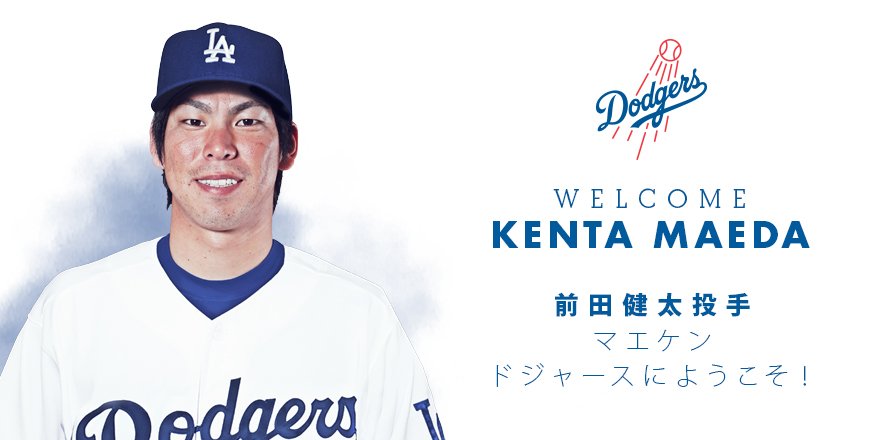
Kenta Maeda, the Japanese ace who was posted by the Hiroshima Toyo Carp, recently signed an 8-year contract with the Dodgers in hopes of taking his talents to the States. While many Dodger fans are hoping he becomes the second coming of Yu Darvish or Masahiro Tanaka, the small right-hander does not come with same kind of hype, pure stuff, or gaudy numbers that the other two posted in the NPB, the highest level of pro ball in Japan. Maeda throws a low-90's fastball, to go with a cutter, sinker, slider, curve and changeup, and according to this article by Fangraphs, his off-speed stuff could very well be some of the best in baseball. It compares the movement on his slider to Giants reliever Sergio Romo, who relies on the slider as his bread and butter for getting K's, and the changeup to Phillies starter Aaron Nola, a young up-and-comer whose changeup is his best pitch. While many other sources will continue throwing out big name comps for the unknown commodity of Kenta Maeda, we will focus on another small right-handed starter as the ultimate comparison: Cardinals right hander Mike Leake.

Standing in at 6'0'', 154 lbs, Maeda's size does not exactly strike fear in opposing batters, neither does he tower over his teammates on the mound. But as the game of baseball shows, you don't need to be a certain height or weight to succeed, and a prime example is the undersized Mike Leake, who is just 5'10'' 190 lbs himself. Without very much height, it is difficult to generate elite velocity, and many of the shorter right handed pitchers succeed off of their wide pitch arsenal, as Leake and Maeda both throw 6 different pitches. Leake's repertoire consists of a low 90's fastball that sits around 88-92, faster on the four-seamer and a touch slower on the cutter, which he threw much more often in 2015, as well as a two-seam sinker that he threw the most, which was somehow faster than the four-seam. His two breaking balls are the curveball and the slider, both of which are above-average pitches, with his changeup as the only offering that was rated below-average in 2015. None of these 6 pitches generate too many swings and misses, but Leake is a ground ball machine, with a career 1.74 GB/FB ratio but just a 6.1 K/9 that was as low as 5.6 last season. 

Maeda's contact profile is similar, with just a 7.4 K/9 in Japan that likely will not translate against better competition. His fastball sits in a similar range as Leake, in the high 80's, low 90's and scraping 94 at times, and he can make it sink or cut as well, all within the same range. His primary breaking ball is the slider, which he throws around 81 mph, which is also the same velocity that Leake throws his slider. Maeda also throws another variation of his slider that many call a slow curve since he throws it much slower (around 72 mph) but it really is just a looser version of the same pitch. However, his best offspeed pitch might be the changeup, which he recently developed. It sits in the low-to-mid 80's and has very good tail and drop on his arm-side. (Click on the square below, if it doesn't work it comes from this link to a tweet from Baseball America's Ben Badler.)
The two right-handers also show very similar deliveries. Even though Maeda has the traditional Asian delivery where he pauses in his balance point, both of them share a pretty good stride length, with Maeda's being a bit farther simply because of his height. Leake does a sort of semi-circle with his stride while Maeda is more of a direct kick, but they end up with the same result. Their arm angles are similar as well, as shown below.
Both pitchers commanded big contracts in the off season, with Leake signing for 5 years, $75 million with the Cardinals and Maeda an incentive-laden 8 year deal with the Dodgers. Leake is obviously the more known commodity, with the Cards paying for his durability, consistency, and his ability to post an ERA under 4 while eating up 180 quality innings. While Maeda does have injury concerns, he should profile similarly to Leake, being a solid #3/4 starter who can throw strikes and induce weak contact, and that is what Los Angeles will be hoping from their new Japanese sensation.

Saturday, February 13, 2016

Road to the Show: Top End College Arms in the 2016 MLB Draft

As we near the beginning of the 2016 college baseball season, fans will be treated to the rises of some surprise players that will jump onto the national scene. Some will be freshman, the next crop of college baseball heroes and superstars. Who will be this year's J.J. Schwarz? The next Alex Lange? Others will be draft-eligible juniors who will shoot up draft boards, much like Andrew Benintendi last season. While we will eventually discover these breakout talents and cover them in future posts, today we will discuss the top two college arms in this year's draft, right-hander Alec Hansen of Oklahoma and University of Florida's A.J. Puk. This will be the second piece in Baseball MTJAG's draft coverage, the first of which covered the top two high school arms, which can be found here.

RHP Alec Hansen, University of Oklahoma
The first thing that stands out about Hansen is his size. He towers on the mound at 6'7'', and his over-the-top delivery gives his fastball a good downward plane. The overpowering fastball is his primary pitch, sitting in the 95-97 mph range and can reach triple digits, he blows the pitch by many college hitters, as evidenced by his 10.32 K/9 in 2015. The fastball is a true plus pitch, with scouts putting a 70, or even a 75 grade on it, and with that arm angle it is a very difficult pitch to catch up to. Scouts also like his slider, thrown at 85-87 with a nice tight break, as well as a 75-80 mph curveball that has good downward movement. As shown in his start against Texas this season (video below), even if those two breaking pitches are graded as plus, he doesn't throw them very often and prefers to live on his hard, four-seam fastball. The reliance on his big fastball has worked in college, but if he does not sharpen them up, pro hitters will eventually find a way to hit that pitch, especially with his below average command/control. While his fastball has gotten him high strikeout numbers in college, his inability to locate has held him back from being a great college pitcher and may stunt his development as a pro. His numbers have been short of stellar, as evidenced by the 3.95 ERA, 1.45 WHIP, and 4.83 BB/9. One reason for his command troubles may be his mechanics, which by being so tall he doesn't repeat very well. Often times the upper body moves forward before his lower body, leading to bad posture and occasionally moments where he looks like this:
As you may have guessed, it is quite difficult to throw strikes like that. He could use a bit more work on cleaning up his delivery and focusing on the follow through and bringing his back leg off the ground, as well as finishing more straight towards the plate instead of off to the left. Another way to have more effective pitch tunneling and spike strikeout numbers would be to use the 12-6 curve more often than the slider. With his delivery, it would make more sense to have a power curve that plays off the fastball than a slider, which would be an easier read out of the hand for the batter. An up-and-down moving pitch would be harder to react to than a side-to-side from an over-the-top guy like Hansen, so that could be a change of pitch selection he'd like to make since both breaking pitches are ranked as plus by scouts anyway. With his size, stuff, control issues, and lack of a defined follow through leg kick, Hansen reminds me of Ubaldo Jimenez, who given all his issues still became a solid starter in the big leagues and even had a couple ace-like seasons. If Hansen could make the proper adjustments with his command, mechanics, and pitch selection, he could be primed for a big year with Oklahoma, and have a shot at being taken first overall this June. 
Here is a video of his start against Texas, a program known for being scrappy and disciplined, in the spring of 2015. He would go on to throw 5.1 innings, walk 5, and strike out 5 while giving up 4 runs, all earned.

LHP A.J. Puk, University of Florida
A two-way player out of high school, Puk offers a strong left arm that can run a fastball up to the high-90's with a plus slurve and solid changeup. Like Hansen, he is 6'7'', and like Hansen, he also has command wobbles. However, Puk has had more success and a better track record against advanced competition, as he has thrown for Team USA and started for two years in the SEC whereas Hansen threw just 11 innings his freshman year at Oklahoma. Puk's fastball has very good velocity and some good movement as well, sitting 93-97 and can reach 98. His curveball is more like a slurve, it doesn't have great definition or sharp break/tilt, but it has good 2-8 movement and some depth to its curve. It plays off well from his fastball, and coming from the same pitch tunnel. He also throws a changeup that has the making of a plus pitch, and he's not afraid to throw any pitch in any count. By mixing and matching all three pitches effectively, Puk has dominated college competition to a 12.0 K/9 and 1.21 WHIP. While the 3.81 ERA is a tad high, it certainly isn't terrible, and his stuff bodes well for a transition to pro ball. His mechanics are pretty clean and he seems comfortable throwing with his big frame and all body parts in sync. He gets very good drive and explosion from his hips and lower body, which contributes to his high velocity. However, sometimes he overdoes it and flies open, yanking the ball into the dirt glove-side. He had a bit of trouble with this at Florida early on, but as he was pitching for Team USA and he was exposed to higher competition and more advanced coaching, he has controlled that a bit better and was able to dominate in his start against Cuba. Once the college season is underway, we will get to see if he has sharpened his command, and if he has, the rest of the SEC better watch out. Puk reminds me of Braves prospect Sean Newcomb, another big lefty with good velo, offspeed, and clean mechanics but still has command issues. Newcomb went off the board at 15th overall back in 2014, and Puk has a better track record and experience against higher competition, so watch for Puk to come off the draft board early on Day 1.

Sunday, February 7, 2016

Potential Free Agent Bargains Part 3: The Madsons

USATSI, CBS Sports
Before Ryan Madson signed a three-year $22 million dollar deal with the Oakland A's, he was one of the biggest free agent bargain signings in the 2014-2015 offseason. Having not thrown a major league pitch in 4 years, the Royals took a chance at rejuvenating the career of this power reliever coming off multiple arm injuries, and it paid off, with Madson being an integral part of a dominant Kansas City bullpen, and Madson parlayed the minor league deal into the biggest contract of his career. This article will be Part 3 in our attempt to scour the free agent market for bargain players (click here for Part 1 and Part 2), breaking down talented ballplayers who, because of injuries, are several years removed from prime production.

Bobby Parnell, RHP
What a rough recovery he's had coming back from Tommy John. After going under the knife in April of 2015, the hard-throwing right hander returned in the second half of 2015, only to struggle to a 6.38 ERA and walk more batters than he struck out. At the end of August, he went through a stretch of a 14.14 ERA in 10 games, he landed back on the DL with shoulder tendonitis, although it was more of a roster move necessity than an actual injury. Back in his prime, Parnell was able to blow 95 mph+ heat past hitters to go with his knuckle-curve that generated swings and misses as well. While he was down to averaging 93 mph last summer, he should be able to regain some of that old velocity being further removed from surgery and given a long offseason to rest. Under the right rehab and coaching circumstances, it would not be impossible to see Parnell return to his prior dominance as a righty set-up man who can strike out 8 per 9 and keep the walks down to a 2 BB/9 as well. The video below is a young Bobby Parnell throwing consistently in the upper 90's while also hitting 102. It may be unreasonable for him to return to that form, but the potential in that powerful right arm should be tempting chance for any team to take.

Jeff Beliveau, LHP (video)
Before he suffered a torn labrum in 2015, Jeff Beliveau had a breakout 2014 for the Tampa Bay Rays, posting a 2.63 ERA and 2.47 FIP with a 10.5 K/9 against a 2.6 BB/9. He was absolutely dominant against lefties, holding them to a .146 batting average. His fastball doesn't wow anyone at 89-91 mph, but he commands it very well and it complements his big curveball. His fastball can cut, sink, or tail, and he mixes in a changeup once in a while as well. The Orioles, who signed him to a minor league deal, will control him through the 2021 season, so it is a low-risk investment that may pay out big in the long run. Shoulder injuries are definitely a big red flag, but if he can make a full recovery, look for him to repeat his dominance from 2014 and maybe even get better with more experience. The Orioles already have Britton and Matusz as lefty relievers, but Beliveau may still emerge as a valuable left-handed relief option in their pen.

Cliff Lee, LHP
Lee, the 37-year-old former ace, has repeatedly stated that he would only sign given a "perfect fit". That would likely mean a team that has an open rotation spot and a chance to compete for the World Series this season. Coming off of a serious elbow injury that has caused him to miss some of 2014 and all of 2015, it is doubtful that he can make a full recovery and be the ace he once was, but Lee is one of the most respected and smart pitchers in the game. Far more than just a soft-tossing lefty, Lee can masterfully command a six-pitch mix, and even though his fastball will likely top out at just 90 mph now, with his knowledge, guile, and command he should still have several productive seasons left in the tank. Look for him to latch on to a contending team that needs rotation help, either now or maybe later in the season, but don't be surprised if he has called it quits and has already thrown the last pitch of a storybook career.

Cory Luebke, LHP
Andy Hayt/San Diego Padres

After a terrific rookie season back in 2011, where the 6'4'' left-hander posted 3.29 ERA, 2.92 FIP, and 9.9 K/9, Luebke, like many before him, succumbed to the long recovery from not one, but two Tommy John surgeries. He has not pitched in the big leagues since 2012, or thrown any professional pitches until tossing 7 rehab innings in 2015 that did not amount to anything. He will turn 31 in March, so he still has some upside remaining, but it will be a long shot. We will have to wait and see if he still has that low 90's fastball and sweeping slider, and whoever picks him up will have an intriguing project in their hands.

Carlos Quentin, OF (video)
Quentin, a former perennial 20 HR force in the heart of the White Sox order, called it quits after a rough 2014 and a short AAA stint with the Mariners early in 2015. Yet the Stanford alum is making a comeback, and at just 33 years old, is out to prove that he still has plenty of pop left in him. The Twins took a chance on his power, and for some very good reasons too. He has been productive since his debut in 2006 to 2013, where he slashed .275/.363/.495 and hit 13 HRs in just 85 games. But injuries hit him hard in 2014, and knee problems have plagued him for the last two years. When he announced his retirement, it seemed as if the knee injuries were career-ending, but he is now attempting a comeback and should be fully recovered. If so, he will add to the glut of Twins DH types, but his power would be very welcome in the Minnesota lineup in 2016.

Friday, January 8, 2016

Delvin Perez and the Play of Insanity

Delvin Perez, a wiry, Puerto Rican high school shortstop is trying to follow the footsteps of fellow islanders Carlos Correa and Francisco Lindor as first round picks in the Amateur Draft. His defense is well ahead of his bat at this point, with great range, speed, instincts, and athleticism. The following play certainly didn't hurt his draft stock:
Video credit: Dave Kirilloff and the Language of Hitting

Skip to 1:03 to see how his body is contorted when he makes this throw. The sheer athleticism he displayed by making this play is absolutely unbelievable. How many MLB shortstops can make this play? Simmons? Crawford? Hechevarria?

I will write more on Perez when profiling draft-eligible high school infielders in a later post, which will be followed by several mock drafts leading up to June. But for now, let's all just stop and admire this insane defensive play. Wow.

Tuesday, December 29, 2015

The Bizarre Spray Chart of Bobby Wernes

Bobby Wernes, an unheralded third baseman from the University of Arkansas, was not considered much of a prospect at the start of the 2015 season. As the college season went along however, the relatively small Arkansas program was put on the map and started garnering scouting interest when centerfielder and eventual 1st rounder and Golden Spikes Award winner Andrew Benintendi heated up and took the baseball world by storm. Wernes, teammates Tyler Spoon and Trey Killian benefited from the extra exposure, and became drafted in the Amateur Draft held in June. Bobby Wernes was solid offensively, hitting .279 with 5 homers, but he stood out for his defensive prowess and ability to make plays like these:


His glove and cannon of an arm are most likely what the Astros were looking to benefit from when the picked him in the 30th round this season, but Wernes took fans by surprise by batting .351 in the NYPL and winning the batting title. He no doubt benefited from an unsustainable .410 BABIP and showed almost no power (.043 ISO and just 8 extra base hits, all doubles), but hitting for an average that high and showing good plate discipline as well (27/27 BB/K ratio, .440 OBP) just cannot be ignored. Thanks to websites such as mlbfarm.com, we can dig deeper into his batted ball numbers and spray charts. Click here for Bobby Wernes page, highly recommend this site with its interactive spray charts and graphs.

The first big take away from his numbers is his propensity for putting the ball on the ground or on a line, and his avoidance of hitting flyballs. His batted ball breakdown is as follows:
Grounders: 53.09%
Line Drives: 30.25%
Flyballs: 12.35%
GB/FB: 4.3
No player in the MLB (min. 150 PA's) in 2015 had a lower flyball percentage, beating groundball machines such as Christian Yelich, Dee Gordon, and Ben Revere, and his line drive rate would top everyone as well. So would his GB/FB ratio, as the MLB leader was the unorthodox Yelich at 4.16, then a big drop-off to Howie Kendrick at 3.52. With his penchant for hitting grounders and never putting the ball in the air, Bobby Wernes' batted ball profile is one of the most unusual you will ever see in all of baseball, yet it is not even the most surprising part of his profile.


This is his spray chart with the short-season Tri City ValleyCats, where he led the New York-Penn League in batting average and made the all star team. The spray of batted balls in the outfield is unbelievable, especially since Bobby Wernes is right-handed. He is a dead-slap hitter, with 22.84% of his batted ball location going to right field, more than any other part of the field, especially left field, where his balls were hit at just 4.94%, less than even his balls hit at the pitcher (5.56%). An astounding 45.5% of his batted balls (close approximation, exact value not available) went to opposite field, where the highest percentage of slapped balls at the MLB level among qualified hitters was DJ LeMahieu at "just" 39%. Billy Burns, the A's outfielder famous for slapping singles the other way, went oppo at a 33.5% clip, which pales in comparison to Wernes.

In college, his swing seemed to work, as he bopped 5 homers in college, including this clutch homer in the semifinals of the College World Series, along with 7 doubles and 6 triples, good for a .425 slugging percentage and .146 ISO. One may wonder why all the power disappeared. It is possible that the higher velocity and better off-speed of pro pitchers kept him late or off-balance, leading to all the batted balls the other way, but he managed to win the batting title regardless and struck out just 27 times in 53 games. While his .410 BABIP might be unsustainable, what is crazy is that his .424 xBABIP (predicted BABIP based on batted balls) suggested that he might have even been unlucky! Adjusted with xBABIP, his actual .351/.439/.394 slash line could have looked an even better and more unbelievable .367/.446/.409. It will be very interesting to see Wernes climb the organizational ladder and see if his power will make a return, and even more intriguing to see if his approach and profile will continue to play against advanced pitching. Below is some video of his swing, feel free to break it down and hypothesize why he hits like he does.

All charts and graphs are courtesy of MLBfarm.com, all videos are from YouTube and I do not own them.


Monday, December 28, 2015

Potential Free Agent Bargains Part 2: The Villanuevas

Carlos Villanueva, Billy Hurst/AP
This is Part 2 of a three-part series looking for free agent bargains in the 2015-2016 offseason. In Part 1, which was featured on MLBTR's Baseball Blogs Weigh In piece on Sundays, we looked at minor league free agents who could produce for major league teams, such as Yangervis Solarte did with the Yankees/Padres in 2014. Carlos Villanueva, himself a free agent, was an undervalued commodity in last year's offseason, not signing until February 4th and only for a minor league, incentive-based deal. He went on to post a 2.95 ERA, 3.74 FIP, and a 8.1 K/9 in 61 relief innings for the St. Louis Cardinals, a versatile and important cog in their bullpen that was solid into the playoffs. In this piece, we will look at other players like Villanueva, undervalued assets who, under the proper circumstances, could become contributing pieces to contending teams.

Pitchers


Ryan Webb, RHP (video)

Coming through the A's and Padres farm system, Webb was a hard-throwing righty who sat 95 mph with his fastball to go with a power slider. As he was traded to the Marlins back in 2011 in the Cameron Maybin deal, he dropped the big fastball, opting for a sinker/slider combo instead that has helped him generate big ground ball rates over the course of his career. The big right-hander (6'6'') has been as consistent as relief pitchers get, with a career FIP that has never topped 3.77 in a single season except his rookie year. Webb sits at 92 mph with his heavy sinker and mixes in a slider to get swings and misses and a changeup to neutralize lefties. He doesn't walk too many as evidenced by his 2.1 BB/9 last season, but he won't strike out too many either, with his 5.5 K/9 in 2015. What he does do is limit batted ball damage, get ground balls (59.2% in 2015) and keep the ball in the park (career 0.5 HR/9). He might not be a flashy flamethrower at the back end of a bullpen, but he should come very cheap and provide quality innings in middle relief.

Cesar Ramos, LHP (video)

Hidden behind the likes of hard-throwing lefties Antonio Bastardo and Oliver Perez, Ramos could be one of the best value pickups to help out a bullpen this season. Like Webb, Ramos isn't exactly a flame-thrower (averages 89.8 mph on his fastball), but he can get ground balls (1.64 GB/FB ratio) and get outs effectively (2.75 ERA/3.07 FIP). It is hard to understand why the Angels would non-tender him at an estimated price of $1.7 million, as he produced solid numbers as a bullpen piece for them last season. It may be because he lacks the traditional velocity, extreme ground ball rates, or ability to annihilate same-sided opponents that most teams want in their back of the bullpen relievers, but Ramos can effectively get righties and lefties out, fill the strike zone (2.6 BB/9), keep the ball in the park (0.3 HR/9), as well as pick up some K's (7.4 K/9), making him a pitcher where the whole is more than the sum of the parts. Ramos does not do one thing especially well, but he can do a little bit of everything, making him an attractive option, especially as a lefty to round out a bullpen.

Domonic Brown, OF
THIS
Dom Brown, at 28, still has so much upside, as much potential as he did when both Baseball America and Baseball Prospectus ranked him the #4 prospect in all of baseball. He is just two years removed from hitting .272/.324/.494 with 27 home runs, as shown in the video above, in a very strong 2013 campaign. Many believed that that was Brown's breakout season and would lead to even more greatness to come, but since then he has fell off a cliff. He OPS'd just .634 the past two seasons, spending the first half of 2015 on the disabled list and rehabbing in the minors. He came back in June and struggled initially, but a hot July, where he hit .293/.303/.427 with 3 HRs gave fans hope that Brown had finally rediscovered his potential, but he hit just .177 the rest of the way. As we dig into some of the more advanced numbers, it seems that Brown's plate discipline has remained generally the same the last three years, with his Contact% hovering around 80%. Batted ball numbers remain about the same as well, with grounders and flies holding generally steady, but the main difference between 2013 and '14/'15 was his hard hit rate and line drive%. In 2013, Brown had a 22.8% line-drive rate and a 33.5% hard-hit rate, compared to 15.7% and 25.5% in 2015, leading to a spike in HR/FB% in his big year, a 19.3% well above his career average of 12.1%. However, all three of these ratios fluctuate greatly from year to year, and it is hard to judge a player based on them. It is possible that if Brown were put on the right team playing the right matchups (career .230 hitter against lefties) that he could see a rebound in these ratios and rediscover past form as he is about to hit his physical prime at age 28. It wouldn't be unrealistic to see him provide solid offensive production against righties in a strict platoon and hit around .250/.315/.425 with 10 or so home runs, good production for possibly just a minor league contract. The downside of having him is he provides negative defensive value (oh god) and is not a great baserunner, but teams desperate for some outfield pop could take a flyer on his sweet swing and easy power and come away with something big.
Fun fact: the home runs he hit off this year came of 4 top-of-rotation arms: Zack Greinke, Jacob DeGromShelby Miller, and James Shields. His fifth came of Braves righty Williams Perez.

Justin Ruggiano, OF (video)
Ruggiano, who just signed with Texas for $1.65 million, is one of the best bargain signings of the offseason. He absolutely destroys left-handed pitching, with a 134 wRC+ and .272/.336/.520 slash line, which will fit in nicely in a platoon with the likes of left handed outfielders Josh Hamilton and Shin-Soo Choo, neither of whom were very good against lefties last year. Ruggiano can hold his own against righties as well, and although below average, a career 93 wRC+ against same sided pitching could be left in the lineup without cringing, although it would not be the ideal scenario for him to be in. He has a bit of speed too, stealing 5 bags last year in just 57 games, and stole 15 in his season as a full time player in Miami back in 2013. He can handle all 3 outfield positions reasonably well with a decent arm, and is a very valuable and cheap option for Texas to have on the bench and impact multiple aspects of the game. An interesting stat to note with the addition of the new StatCast info from this season: the average MLB hitter generates 0.43 mph of velocity on each pitch, but Ruggiano is way over with 5.4 mph generated, above Trout, Donaldson, Cespedes, Bautista, Cruz...

George Kottaras, C (video
The lone player on this list who did not play in the majors in 2015, Kottaras can be had for a minor league deal. He is a career 100 wRC+ hitter in the big leagues, above average production for a catcher, and the journeyman possesses one of the best plate discipline/power combos out of all backstops in pro ball. His career 14.1% walk rate deserves looks at for a shot to be a backup/platoon option somewhere, and it was an insane 20.8% in AAA Charlotte this season, where he hit .247/.403/.505 with 7 homers in just 31 games. He is a good defensive catcher as well, with a career 5.0 Def score on Fangraphs, a good pitch-blocker but a bit below average with his arm and pitch-framing. His main drawback is his penchant for striking out, as his career 23.7% k-rate shows, and in his last full season in the bigs, he K'd at a 33.3% clip. As a part time player at an offensively weak position like catcher though, striking out too much doesn't seem like too big a price to pay for a cheap option that hits left-handed who can provide some power, patience, and defense to a lineup, and catching-dire teams like the Mariners or Phillies could give Kottaras a shot at redemption in the MLB.

Sunday, December 27, 2015

Rule 5 Wrapup

The Rule 5 Draft included several talented players that could play contributing roles this coming season. The biggest news, of course, is the Padres selecting four players to fill in their major league team. It is unlikely that all four will be kept, but there is no harm in giving these players chances at cracking the roster. Here is a rundown of all players drafted in the major league phase:

OF Tyler Goeddel, Philadelphia Phillies (from Rays)
Goeddel is an athletic outfielder who can also play third base well. He has a highly-regarded combination of speed, power, and plate discipline that made him a worthy first pick in the Rule 5 Draft. It has taken Goeddel several seasons to develop his raw tools, but he had a nice season in AA for the Montgomery Biscuits when he put the whole package together, slashing .279/.350/.433. He will likely provide the Phillies with an alternative option in the outfield in addition to starters Aaron Altherr and Odubel Herrera, and if given regular playing time, expect him to hit around .250/.310/.405 with 7 home runs and 15 stolen bases with potential for much more in the future.

OF Jake Cave, Cincinnati Reds (from Yankees)
A defense-first outfielder with some offensive potential, Cave reminds many Yankees fans of Brett Gardner when he was coming through the system. He hit well in AA/AAA in 2015, but it wasn't quite the breakout that Yankees fans were hoping for coming off a solid showing in 2014. He will likely never be a star in the big leagues with his lack of big-time power, but his solid, all-around approach ensures that he is MLB ready and will probably stick on the Reds roster all year, with a floor around what Sam Fuld has produced over the course of his career. Cave could slash something like .245/.310/.340 this season while providing plus defensive production, which is good value for both the present and the future, especially in the Rule 5 Draft.

LHP Evan Rutckyj, Atlanta Braves (from Yankees)
Another player taken out of the Yankees system, Rutckyj is nowhere near as heralded as Cave coming through the system. That doesn't mean he's a bad ballplayer though, as he has been a solid left handed reliever throughout the Yankees system. He generates a very good strikeout rate with his low 90's fastball that has been described as plus by Baseball America's J.J. Cooper, as well as a slider that is fringy. His command has been wobbly before this year but he has sharpened it up with a lower walk rate in 2015. He should be a decent LOOGY out of the Braves pen if given the chance to succeed. Interesting stat to note: he struck out 41% of all lefty hitters he faced this season.

RHP Luis Perdomo, San Diego Padres (from Cardinals, through Rockies)
A live-armed Dominican from the Cardinals system, Perdomo has been ranked highly on prospect lists the last few years with his 93-97 mph fastball. His secondary offerings are still in the making, but his slider has flashed serious potential before. He topped out at A-ball this season, so the Cardinals took a risk leaving him unprotected because he was so far away. If he sticks on the major league roster all season, it could end up as a hurting loss, but with his relative rawness it will be difficult for the Padres to keep him all year. In his prime, he could be a #2 or 3 starter who posts good K-rates, but he has quite a bit of work to get there whether it's with the Cardinals system or the Padres.

2B/OF Colin Walsh, Milwaukee Brewers (from A's)
Walsh, a 25 year old infielder, broke out in a big way this season for the AA Midland RockHounds. The Stanford alum has shown solid plate discipline throughout his career, which has taken him through two organizations (Cardinals and A's) and reached AAA, in 2014, in which he struggled. Sent back down to AA, he built off his strong plate discipline with a walk rate north of 20% as well as flashing some power he hadn't shown since 2012 when he homered 16 times for low-A Quad Cities. He hit .302/.447/.470 with 39 doubles, 13 home runs and an insane 124 walks that led the Texas League by far. Walsh does have some strikeout issues, but given the right role in the new direction that the Brewers are headed under David Stearns, he could thrive in a utility spot and hit in the neighborhood of .245/.350/.375.

OF Jabari Blash, San Diego Padres (from Mariners, through A's)
Blash, a native of the Virgin Islands, flashes one serious tool: power. A true 70-grade, Blash is the only Rule-5 eligible player with true potential to top 35 HRs this year, given the proper circumstances and adjustments made. He has a bit of speed and can draw a walk, and he is surprisingly mobile with a 6'6'' frame and can play average-above average defense in right field. His only major concern is swinging and missing, as he racks up very high strikeout numbers over the course of his career before bashing 36 bombs between AA/AAA this season. If he receives full playing time in San Diego, expect a line around .215/.280/.440 with 19 HRs.

RHP Josh Martin, San Diego Padres (from Indians)
A former 10th round pick by the Cleveland Indians, the 25-year-old Martin dominated AA this season with a 2.27 ERA and a 10.7 K/9 to go with a solid 2.5 BB/9. The 6'6'' righty throws in the low-to-mid nineties with a curveball and changeup. He has produced a lot of strikeouts over the course of his minor-league career, and it is not unreasonable to expect him to do the same in the bigs. Given the light bullpen depth of the Padres, Martin will receive a fair chance to prove himself in Spring Training. He should be at least an average middle reliever, and a realistic expectation is around a 4.00 ERA with 8.4 K/9 and 3.3 BB/9.

OF Joey Rickard, Baltimore Orioles (from Rays)
Rickard is a unique player, with a skill set that differs from your traditional corner outfielders. He lacks the conventional power, in fact he has barely any power at all (2 HRs this season), but he makes up for it with extreme plate discipline and good speed. He bats right-handed, unlike most slappy hitters who profile similarly, giving him a slight disadvantage getting out of the box. Interestingly, he throws with his left arm, which is decent but not a cannon. He does have good range, however, and his speed makes him an above average defender in both corner spots and could probably handle center field as well. He is very similar to teammate L.J. Hoes, who put up similar numbers but struggled in his brief time in the majors. Both players are very BABIP-reliant, and it is very likely that they will compete for the fourth/fifth outfielder job in Baltimore. Expect Rickard to hit around
.260/.330/.340 if given a spot on the Orioles roster. Here is a video of him making an incredible defensive play in the Venezuelan Winter League.

RHP Deolis Guerra, Los Angeles Angels (from Pirates)
The only player on this list with big-league experience, Guerra was a former top prospect in the Mets system, sent to Minnesota in the original Johan Santana trade. He scuffled, however, as he reached the upper levels in the minors, and the Twins eventually converted him to a relief role, where he still struggled, but posted better strikeout numbers. Before the 2015 season, the Pirates took a shot on Guerra's live arm and sent him to AAA Indianapolis, where he dominated to the tune of a 1.23 ERA and a 37/8 K/BB ratio. He was given a cup of coffee in the bigs but gave up 5 HRs in just 16.1 innings, leading to being DFA'd, clearing waivers, and picked in the Rule 5 Draft by the Angels. He will be given an opportunity to make a relatively weak bullpen and pick up some innings and strikeouts along the way.

RHP Joe Biagini, Toronto Blue Jays (from Giants)
Biagini, a 25-year-old right hander, had a nice season in AA Richmond in the Giants organization, posting a 2.42 ERA across 130.1 innings. He relies on a three-pitch mix, with a 87-92 mph fastball, a slurvy breaking ball, and a changeup. He doesn't strike out too many batters, as evidenced by his 5.8 K/9 ratio, but if the ERA is worth anything, he should be good at limiting batted ball damage, and the Blue Jays are hoping that skill will hold up in the major leagues. His best bet is to make it as the long man in the bullpen and hope his fastball ticks up in relief, but with his low strikeout rate and lack of success before 2015, it will be tough to crack a contending Blue Jays roster.

RHP Matt Bowman, St. Louis Cardinals (from Mets)
An alum of Princeton University, Bowman is a right-handed starter with a funky delivery. He has four pitches that he mixes well, a low-90s fastball, a slider, changeup, and curveball. Unlike Biagini, who had struggled over the course of his career before breaking out in 2015, Bowman had been a solid pitcher throughout the minors, posting good strikeout/walk rates at each level before struggling hard this year. His K/9 fell from 8.3 to 5.0, and his ERA rose from 3.32 to 5.53. But if there is any organization with a niche for finding hidden gem pitchers, its the Cardinals, and look for him to rebound this season in a long-relief role in the St. Louis bullpen.

LHP Daniel Stumpf, Philadelphia Phillies (from Royals)
In the second round of the Rule 5 Draft, the Phillies took a lefty from the Royals system, Stumpf, who can hit 94 mph with a good slider. In AA, left handed hitters managed to hit just .151 off of him and the Phillies are hoping he will be the LOOGY they are looking for to round out the bullpen.

LHP Chris O'Grady, Cincinnati Reds (from Angels)
Taken from an already thin Angels system, the pick of O'Grady will only hurt more. He profiles similarly to Daniel Stumpf, with the fastball-slider combo from the left side that has been effective against left handed hitters. He pitched well in AA and made it to AAA, striking out 8.9 per 9 innings across both levels. Expect him to compete for a LOOGY role in the shallow Reds bullpen as well.

RHP Zach Jones, Milwaukee Brewers (from Twins)
A righty relief prospect in the Twins system, Jones is a highly known commodity in baseball circles because of his ability to throw 100 mph. He also throws a power slider that plays well with his fastball and confounding for A-ball hitters to square up. However, his development has been slowed due to command/control issues and injuries. While he reached AA for the first time this season, he struggled with a 6.00 ERA and turned 25 years old already. Given proper coaching and refinement to his mechanics, Jones could become a valuable bullpen asset for the Brewers. His plus-plus stuff and potential to become a big-time set-up man was too much for Milwaukee to pass up, even for all the control problems. If he sticks, expect bouts of wildness every once in a while, but don't be surprised if he becomes a lockdown reliever.

RHP Blake Smith, San Diego Padres (from White Sox)
Yet another right handed reliever taken by the Padres, Smith is a converted outfielder with a big arm. He began his career as a second-round pick out of Cal, and he started hot, hitting lots of homers in the lower levels of the minors. What caused the switch was when he began to struggle against more advanced pitching in the higher levels of the system, and he has begun to harness his powerful right arm the last two seasons. He is already 27, but over the course of the past year he has improved his command and control, shaving his BB/9 from 8.7 his first year pitching in 2013 down to 4.6 in 2015, still high but a major improvement, especially considering the 10.9 K/9 and success at the AAA level. He will be a tough keep on the Padres roster all year, as hard-throwing righties with command issues are a dime a dozen, but the Padres obviously see something they like and will give him an opportunity to succeed and make the club in Spring Training.

1B/OF Ji-Man Choi, Los Angeles Angels (from Orioles)
When the Orioles signed Choi to a minor league contract early this winter, they certainly did not expect this coming. Choi was a minor league free agent, which made him Rule 5 eligible, and by signing him but not protecting him on the 40-man roster, the Orioles made a possible mistake. Choi, a former top prospect in the Mariners system, has missed most of the last two seasons due to PED suspension and multiple injuries. When healthy, he has produced power and solid defense in the minors, and the Angels are hoping he would do the same, filling their hole in left field and spelling an aging Albert Pujols at first. He is tough to project due to lost time, but it is possible for him to put ip a .240/.300/.390 slash this season with room to grow more.