Friday, April 22, 2016

Baseball MTJAG's 2016 MLB Mock Draft v1.0

Rick Schultz, Getty Images
With the young MLB season underway, fans have been treated to the extraordinary performances by rookies such as Trevor Story, Tyler White, and Ross Stripling. These homegrown ballplayers have all been picked by their organization through the June Amateur Draft, and their production serves as a reminder of the importance of picking well in the Draft. While the annual Amateur Draft is still two months away, I will take an early stab at who will go where in the first round this June.

1-1 Philadelphia Phillies: LHP Jason Groome, Barnegat HS (New Jersey)

Pros: As polished as high school pitchers get, fastball runs into the mid-90's with a plus curveball and changeup. Has the size, stuff, and command that are head and shoulders above his peers, with great pitchability and clean mechanics. 
Cons: High school pitchers are always a risk to be taken first overall, but Groome's polish should make him a safe bet. Has been throwing year round for many years, so injury concerns and overuse may be an issue later on.
MLB Comparison: Fastball/curveball combo with good command and pitchability reminds me of Jon Lester
I wrote more about him in a previous piece here.

1-2 Cincinnati Reds: OF Blake Rutherford, Chaminade College Prep (California)

Pros: Tall, strong and athletic, Rutherford is a true 5-tool prospect. He can play really run and play defense, but his calling card is his bat. Clean, easy swing with good bat plane and enough loft in his swing to generate power. Has a toe drag with his back foot that is quite common with big league hitters these days.
Cons: Front shoulder flies open early occasionally in games. Toe drag leads to weight being on front foot sometimes, but overall still a polished swing for a high schooler. At 19 years old, quite a bit older than most competition. Is he truly this talented or just beating up on younger pitchers?
MLB Comparison: Clean swing, big toe drag, big power, overall package similar to Carlos Gonzalez

1-3 Atlanta Braves: OF Corey Ray, Louisville
Pros: Package of tools are solid, with good power and speed to go with the ability to stick in center field. Very fast and smart baserunner, has power to all fields, good usage of entire body in his swing. Good makeup and work ethic.
Cons: Strikes out a bit excessively as swing can get long at times. Crouched stance and small leg kick could result in changes in eye level during swing.
MLB Comparison: Overall tools package with plus-plus speed and power similar to Gregory Polanco

1-4 Colorado Rockies: RHP Riley Pint, St. Thomas Aquinas HS (Kansas)
Pros: Live arm that can reach 98 mph, sitting 95-96. Multi-sport athlete, plays basketball in winter, so fresh arm with less innings due to less time on travel circuit. 6'4'' frame with room to fill out and throw even harder, power curve with good bite.
Cons: Raw and relatively inexperienced, curveball and changeup flash serious potential but very inconsistent. Mechanics involve heavy whipping action of the arm, high effort delivery. Needs polish, but has plenty of time to develop.
MLB Comparison: Size, velocity, and pitch repertoire reminiscent of a prime Justin Verlander, but needs lots of development to get there.
I wrote more about him in a previous piece here.

1-5 Milwaukee Brewers: RHP Connor Jones, Virginia

Pros: Low-to-mid 90's fastball, very good cut-slider type pitch that is his go-to out pitch. Gets lots of ground balls with a plus changeup, might be the most polished and safe bet out of all pitchers in this draft class.
Cons: Lack of ace upside, sinkerballer will not pick up very many strikeouts, but his ground-ball based approach should shoot him through the minors and settle in as a solid #3 starter in the majors.
MLB Comparison: While Jake Odorizzi is more of a flyball pitcher, the overall numbers and pitch arsenal is generally what Jones could produce.

1-6 Oakland Athletics: OF Kyle Lewis, Mercer 

Pros: One of the top college hitters in the nation, has performed well during the regular season and in the Cape Cod League. Above average power, and overall athleticism, good work ethic. Very impressive stats at Mercer this spring, hitting .432/.565/.832 with 13 HRs so far.
Cons: Still a bit raw, aggressive at the plate but has toned it down this season with more walks and less K's. Attends a smaller school in a lesser conference, so he is facing inferior pitching than that of the SEC or ACC.
MLB Comparison: Impressive power and can draw walks, but he strikes out quite a bit, offensively similar to Khris Davis.

1-7 Miami Marlins: LHP A.J. Puk, Florida
Pros: Much has been made of Puk's troubles this spring, but he has done the exact same as the last couple years. Using his mid 90's fastball that touches 99 and a plus curve, Puk has collected strikeouts at a very high rate this season. Good track record of success in college, international competition, and Cape Cod. Solid mechanics that uses his size effectively with his body parts in sync.
Cons: High walk rate, 3.93 BB/9 so far in the college season, command issues have plagued him at every level, but his pure stuff has been able to cover it up so far. Got arrested for climbing a construction crane once, but at least it wasn't for something worse.
MLB Comparison: Sean Newcomb hasn't reached the majors yet, but the former-first round pick has the same traits as Puk: size, stuff, velocity, but control issues as well.
I wrote more about him in a previous piece here.

1-8 San Diego Padres: OF Mickey Moniak, La Costa Canyon HS (California)

Pros: The Perfect Swing, short to the ball and long through the zone with good extension, controls entire body well, great bat head control and two handed follow through. Can hit hard line drives all fields. Runs very well and also plays excellent defense. Exceptional bat speed.
Cons: Lack of present power might concern some, room to grow into some more pop but will take time as he fills into his frame.
MLB Comparison: Michael Brantley was a great contact hitter with plus defense in the minors and when he first broke through but has really tapped into the power in recent years, a career arc that Moniak could follow.

1-9 Detroit Tigers: SS Delvin Perez, Professional Educational HS (Puerto Rico)
Pros: Plus plus defender at short, strong arm, outstanding range, and smooth actions. Lanky with room to fill out, potential with the bat, but unbelievably gifted defensively. Very high energy and high effort ballplayer. 
Cons: Very raw at the plate, lacks plate discipline. Susceptible to offspeed, swing includes an unorthodox weight transfer and lots of excessive noise. Room to grow as a hitter but defense will take him a long way.
MLB Comparison: It may seem like a lazy comp, but Andrelton Simmons is similar to Perez as a shortstop with amazing defense but a questionable yet projectable bat with the tools ahead of production.

1-10 Chicago White Sox: OF Buddy Reed, Florida
Pros: Athletic and toolsy, Reed may have the most raw talent out of any college outfielder in the draft. Switch hitter with plus speed and is good at keeping his hands inside the ball, spray line drives. Frame suggests power to come, can lay down a bunt.
Cons: Prone to striking out, raw in terms of approach. Works count well but passive on hittable pitches early. Choppy hand path from the right side, sometimes out on front foot from the left, limits raw power. 
MLB Comparison: Speedy switch hitter with good defense and a bit of raw, undeveloped pop that he might tap into later on, similar to Coco Crisp

1-11 Seattle Mariners: RHP Ian Anderson, Shenendehowa HS (New York)
Pros: Tall, lanky, projectable frame for higher velocity but already sits comfortably in the low-90's, easy mechanics with good arm speed
Cons: Developing offspeed lacks present feel, from cold-weather state so a little more raw than prep pitchers from California or Florida, but Anderson already has decent command.
MLB Comparison: Clay Buchholz has similar size and stuff, development path could be similar to Anderson's.

1-12 Boston Red Sox: 3B Nick Senzel, Tennessee
Pros: Very sweet swing, clean bat path and plane will generate lots of line drives, has some raw power. Good approach at the plate, solid baserunner despite lack of raw speed. Polished college hitter, should shoot quickly through farm system. 
Cons: Not much loft in his swing, will limit his power production if no change. Stiff actions on defense, but arm strength can compensate.
MLB Comparison: With a little more loft in his swing, could be a similar ballplayer with a skillset like Todd Frazier.
I wrote more about him in a previous piece here.

1-13 Tampa Bay Rays: 3B Josh Lowe, Pope HS (Georgia)

Pros: Has raw power to go with natural loft in his swing, strong arm at third base as well as plus speed. Loose and athletic, Lowe should become a dual threat on both offense and defense.
Cons: Swing can get long and loopy when he extends his hands, might have extreme flyball tendencies and pop up quite often.
MLB Comparison: Having plus power, strong arm and projectable plus defense, Lowe's ceiling may mirror Kyle Seager.

1-14 Cleveland Indians: RHP Jordan Sheffield, Vanderbilt
Pros: With his brother Justus already in the system, the Indians could take the flame-throwing righty this season. Sits 94-96 with his fastball, can hit 98 with a plus slider and a decent changeup.
Cons: Lengthy injury history, high-effort mechanics, short right handed pitcher, many scouts doubt that he can become a starter long-term.
MLB Comparison: Potential for three plus pitches and absolutely nasty stuff, his size and stuff is similar to Lance McCullers.

1-15 Minnesota Twins: RHP Logan Shore, Florida
Pros: Low 90's fastball with a plus changeup and decent curve, good command of all three pitches. Durable, ate innings for the Gators all three years, should continue to be a workhorse in the pros.
Cons: Low strikeout rate in college, may struggle with getting whiffs in pro ball. Seems to rotate hips before dragging arm across. If he can get them in sync and take advantage of his size, he could throw harder with even better command.
MLB Comparison: Without plus stuff, Scott Feldman has been a serviceable major league pitcher for many years and Shore could succeed with a similar package.

1-16 Los Angeles Angels: OF Bryan Reynolds, Vanderbilt
Pros: Disciplined approach at the plate, hits line drives to all fields with enough strength to hit balls out. A strong defender, he has good speed and can steal 20+ bags in the majors.
Cons: A switch hitter, Reynolds is prone to becoming too slappy from the left side, out in front on his swing. Happens when he hits righty as well, could sap power production. Average arm may limit him to left field.
MLB Comparison: Being a switch hitter with speed, some raw pop and decent defense, Angel Pagan is a reasonable comparison for what Reynolds could be.

1-17 Houston Astros: C Chris Okey, Clemson
Pros: Catchers who can run are a rarity, and Okey has a touch of speed to go with a line-drive swing and a bit of pop. A true catcher with good receiving and blocking skills, he has also has a very good pop time. Durable, has played in every single game in his college career. Might be able to play second base or catcher if needed.
Cons: Crouched stance and average bat speed may limit complete development of power, but he should be good for 10-15 homers with a good batting average.
MLB Comparison: The complete package behind the dish, Okey could develop in a similar mold as Jonathan Lucroy.
I wrote more about him in a previous piece here.

1-18 New York Yankees: RHP Cal Quantrill, Stanford

Pros: The son of former Yankee Paul Quantrill, Cal has better stuff than his dad, with a fastball that reaches 95 and solid offspeed offerings like a plus changeup and at least average curve and slider. His mechanics are decent, and has good command and pitchablity.
Cons: Still rehabbing from Tommy John surgery, but aside from the medical red flags, Quantrill has the complete package on the hill.
MLB Comparison: Assuming all the physical issues check out, the performance of Michael Wacha is something that Quantrill could match and achieve if he cracks the majors.

1-19 New York Mets: SS/3B Nolan Jones, Holy Ghost Prep (Pennsylvania)
Pros: Outstanding bat speed with raw power and sweet swing to match, Jones may have the highest hitting ceiling in the draft. Good extension in his swing. Big kid at 6'4'', could have 25 HR power as he fills out.
Cons: Strong arm and good hands, but he may be too big to play short and shift over to third base. Pre-swing load is kind of unorthodox with his elbows together, raw approach at the plate can lead to over-aggressiveness. 
MLB Comparison: Jake Lamb is still young and hasn't hit his prime yet, but the upside he has is similar to that of Jones.

1-20 Los Angeles Dodgers: RHP Dakota Hudson, Mississippi State
Pros: Mid-90's fastball reaches 97, hard cut-slider may be the nastiest pitch in the class. Curve and change are decent as well, extreme groundballer who can pick up lots of K's with his plus stuff.
Cons: Lack of track record as a starter, lack of polish in first two years of college. Seems to have turned a corner last summer at the Cape, but the inconsistencies still flash.
MLB Comparison: Dirty stuff and ground ball rates, combined with occasional command problems, could be another Tyson Ross.

1-21 Toronto Blue Jays: OF Will Benson, The Westminster Schools (Georgia)
Pros: Six-foot-six lefty with big time pop, Benson has the most power potential in the draft class. Smooth bat plane through the zone, slight uppercut to hit balls out. Strong and built, he moves well for his size and should be able to hold his own in right field. Young for his draft class
Cons: Lots of twitching pre-swing, occasional changes in eye level during swing. As he gets bigger he might take a step back defensively and slow down on the bases.
MLB Comparison: Jay Bruce has gotten a bad rep with poor recent seasons, but before his decline he was one of the top power producers in the National League, and Benson could match that production.

1-22: Pittsburgh Pirates: RHP Kevin Gowdy, Santa Barbara HS (California)
Pros: Skinny right-hander can run a fastball in the low-90s, up to 94 mph, with an above average slider and changeup. Pitchability is off-the-charts for a prep righty, and clean mechanics are a plus.
Cons: Doesn't throw as hard as other, more exciting prospects, but Gowdy can pound the zone with three consistent, above-average offerings. Maybe not as high of an upside, but should turn out as a solid #3/4.
MLB Comparison: While he doesn't blow it by hitters, with command of all his pitches, Sonny Gray has been able to rack up strikeouts and grounders, a projection Gowdy could follow.

1-23 St. Louis Cardinals: OF Nick Banks, Texas A&M
Pros: Polished college hitter with a flat bat plane, geared towards hitting gappers but with enough raw strength to hit 20 homers annually. Good plate discipline, willing to draw walks, solid baserunner as well, playing above his speed.
Cons: Flat bat path limits power, could use more loft. Athletic but a better fit in the outfield corners than in center field. 
MLB Comparison: Nick Swisher had more power when he first debuted, but Banks has the kind of patience and raw power to tap into to produce those numbers.

This concludes the end of the first round. In later versions, we will continue the mock draft into later rounds and shift some of the above picks based on overall performance this spring. 
All team logos courtesy of sportslogos.net.

Thursday, April 14, 2016

Road to the Show: Top Draft-Eligible Corner Infielders

As the college baseball season passes the midway point in 2016, several draft-eligible players have seen their stocks go up and down. With a shallow college infield class this year, the big seasons of Nick Senzel and Will Craig have set themselves apart from the competition and put them in conversation to be taken in the first round. Major league teams like their college corner infielders to be polished hitters with big power to go with it, and that is exactly what these two hitters can provide.

Nick Senzel, University of Tenneseee
Senzel, ranked Baseball America's top college hitter going into the season, may not have the flashiest tools or big-time power production, but he has a track record of consistent hitting in college as well as an MVP award in the Cape Cod League in 2015. It is not hard to see why scouts put him in high perspective with his smooth swing and built frame that suggests power development to come. Senzel starts his swing with a wide stance with a small stride that is quiet like most components of his swing. He uses his lower body well to supply power without over-rotating while keeping his hands in through a clean, flat bat plane that will create hard line drives with his quick hands and above-average bat speed. He has a disciplined approach at the plate, walking more than he strikes out with good knowledge of the zone. While he may not be a burner on the base paths with his average speed, he has good baserunning instincts and can swipe a few bases, going 32-39 over the course of his college career. Defensively, he can play third or second and maybe even short in a pinch, but with his big frame he is probably better suited for third base, especially since he has a strong arm but iffy range and stiff motions sometimes. A pure hitter, line drive machine, Nick Senzel is the prototypical advanced college bat. While the raw power has not showed itself in games yet, with just 9 home runs in 136 college games thanks to his flat bat plane geared for line drives, he is strong enough to tap into it in pro ball if he makes the necessary adjustments. He could shoot quickly through the minors and have a .280/.350/.450 ceiling in the big leagues, and if the power really comes through he could resemble the next Todd Frazier.

Will Craig, Wake Forest University
Craig has been the best hitter in college baseball by far this season, obliterating the ACC to a .466/.581/.909 slash line. A big man standing in at 6'3'', 225 pounds, he is not a great defender at third base, with awkward movements with stiff hands that will likely result in a move to first base, which would be a waste of his absolute cannon of an arm. But defense is not what scouts are watching for in Craig, it is his bat that excites everyone. Strong and powerful with good loft in his swing, expect lots of flyballs and homers from him when he reaches the low level of the minors. He is yet another example of an advanced college bat with a solid approach, also walking more than he strikes out, but his below average speed negates any baserunning value he may have. His swing is very dependent on his arms and upper body, his brute strength has been enough to demolish college pitching. As Craig transitions to pro ball, some improvements to look out for are a harder back foot pivot and more lower body rotation, where he can use his strong and built lower half to further generate power output. While Trevor Plouffe may not be a flashy comp, he has quietly produced good power numbers for Minnesota the last few seasons and as a former first-round pick, seems like a reasonable expectation as to what Will Craig can become.

Wednesday, April 13, 2016

Minor League Spotlight: Hartford Yard Goats

Chris Creamer/sportslogos.net
With a hot 5-2 start and four HRs from top prospect David Dahl, the inaugural season of the Hartford Yard Goats is underway. Formerly the New Britain Rock Cats, the Double-A team of the Colorado Rockies, the franchise moved to Hartford in the 2016 season. Hartford, being a historically rich city both in baseball and culture, was a prime landing spot for a minor league franchise.

Hartford is the capital of Connecticut, home of the Hartford Union train station, which serves as an important part of the historic New York, New Haven, and Hartford Railroad that has been around for 150 years. The Yard Goats moniker may seem like nonsense to non-Hartford residents, but it is one of major historic symbolism and significance. Yard Goats is a nod to Hartford's railway history, as it is a slang term for a locomotive that moves trains from track to track, much like a Double-A team is one that moves players from the low minors to the AAA team, just one step away from the majors. Like most minor league baseball teams, the name was chosen through a fan entry contest, narrowly beating out names such as the Whirlybirds (Hartford's history with helicopters), and the Praying Mantises (Connecticut's state insect). Props to Anthony Castora, a fan of minor league baseball, for coming up with such a creative and symbolic, if not a bit quirky, team name.

Raimel Tapia, zimbio.com
Not only do the Hartford Yard Goats have a catchy name, they are loaded with young and exciting talent too. Recently ranked as the third most-talented team in all of Minor League baseball, Hartford boasts a top-notch pitching rotation as well as explosive and potential-laden hitting that will strike fear in Eastern League pitchers. The aforementioned Dahl, a center fielder who has gone deep four times in just seven games, was a first-round pick in 2012 and has been a top 100 prospect ever since, ranked as high as #22 by Baseball America. Alongside him in right field is another top 100 prospect, Raimel Tapia, a fleet-footed, sweet-swinging outfielder who brings a good hit tool, batting over .300 in every level of the minors, and a strong arm to throw runners out. Not to be forgotten is the left fielder Rosell Herrera, who fell off prospect rankings after being two mediocre years removed from hitting .343/.419/.515 with 16 HRs in low-A Asheville, but still brings some tools and flash to the table.

At the infield corners, the Yard Goats have two of Colorado's top power prospects, third baseman Ryan McMahon and first baseman Correlle Prime. McMahon is arguably the top 3B prospect in the game, having dominated every level of the minors with his combo of power and patience. Prime has a flashy-name suitable for the Hartford Yard Goats, but he has an even flashier power in his bat that makes him a threat in the lineup. Coming off of a disappointing season in 2015, he is a year removed from the 47 doubles, 21 homers, and 102 RBI's campaign back in low-A. He is very raw and not a big name in most prospect circles, certainly not as big as McMahon, Dahl, and Tapia, but Prime has some tools that could take him up to Colorado when he figures out how to use them. Shortstop Pat Valaika was drafted out of UCLA in the 9th round in 2013, and while he isn't much of a prospect or hitter, I got to see him play in college and he is a smooth and reliable defender at short, profiling as a possible future big-league utility man.

On the pitching side, Hartford's rotation has three of Colorado's top pitching prospects, 2014 first round lefty Kyle Freeland, 2015 breakout Antonio Senzatela, and the recently acquired German Marquez. Freeland, a big lefty, has good command of the strike zone to go with a low-to-mid 90's fastball and hard slider from a 3/4s arm slot. Senzatela and Marquez are both live-armed Venezuelans, both just 21 years of age. Senzatela is another command artist, and he can really hit his spots and paint the corners without an overpowering fastball or particularly impressive off-speed. Marquez throws hard, but the secondaries lack as well, leading to a low strikeout rate. Set-up man Austin House, who came over in the Mark Canha trade, and closer Matt Carasiti should form a solid back of the bullpen for the starters to turn over to and finish off wins. With a strong pitching staff and powerful bats, the Hartford Yard Goats should be in for an exciting inaugural season in their brand-new stadium.

Fun Fact: the Hartford Yard Goats new home field will be named Dunkin' Donuts Park. Of course.
Yes, apparently this is actually a thing, Jeff Cohen/WNPR

Saturday, February 20, 2016

Road to the Show: Top Draft-Elgible College Catchers

Catcher offense has never been too high at the major league level, as the position is commonly associated with being the brains of the operation, doing subtle things to help win ballgames such as calling pitches and framing them. Defense is the first priority for catchers, and any hitting is a plus that is very much appreciated. Most draft classes do not offer much in the way of offensive-minded catchers anymore, but this year is a little different. As with most other years, there is not a huge abundance of high upside catchers available in the first round, but two college catchers stand out from the rest: Chris Okey and Zack Collins.

Chris Okey, Clemson University
Okey is a very special catcher as he does not possess the typical stocky build that catchers have, and he has an above average speed tool that most others don't. His athleticism could also allow him to play second base or left field, which is very valuable for all teams to have, as a catcher who can play multiple positions widens the options off the bench. While Okey does not have a big cannon of an arm, he combines a quick transfer and strong release to have a very fast pop time, helping him be well above average at throwing runners out. He also rates above average at blocking and framing, making him one of the most sound and complete defensive catchers in college baseball. His defense sets him apart from other catching prospects, but the bat is what really pulls him away from the competition. After hitting a decent but underwhelming .248/.311/.350 in his freshman year, Okey broke out last season, bashing 12 HRs and slashing .315/.389/.545 in all 61 of team games. The crouched stance at the plate and average bat speed likely limits his power, but his ceiling could be 10-15 HRs annually in the majors. He does have good bat-to-ball skills though, so he should be able to hit for a high average. Something like .280/.340/.430 is a reasonable ceiling for the durable Chris Okey, who has played in all 122 games of his college career. A big league comparison for an absolute best case scenario would be Milwaukee's Jonathan Lucroy, whose package of solid offense and outstanding defense make him one of the best catchers in baseball. Chris Okey should be a mid-to-late first rounder in June, but a big spring and some team in need of some catching talent in their farm system could reach for him earlier.

Zack Collins, University of Miami
Collins can straight up mash. One of the best hitters in college baseball the last two years, he posted a very strong .983 OPS in his freshman year before following it up with an even more insane 1.032 OPS in 2015. He has a very strong lower body that generates lots of power, making him a potential threat for 25-30 HRs perenially in the major leagues. He gets good loft in his swing that will produce hard flyballs, and he can really pull the ball with authority. He could use a little work with exploding his hips a little more and the swing can get long at times, but usually he can keep his hands in and drive inside pitches out to right field. Collins will definitely be a capable bat at the next level even if he strikes out a bit too much, but he is patient enough to draw some walks too so it should balance out. His issues are mostly on the defensive side, as many scouts don't think his big body will be able to stick behind the plate. He has a slow pop time and is below average at blocking and receiving, so his defensive chops will need a lot more work. If not, he should transition seamlessly to first base, and his bat will probably play there, but his offensive production would be very welcome behind the plate. Zack Collins reminds me a lot of Kyle Schwarber, and if a team falls in love with his bat the way the Cubs fell for Schwarber, he could go much higher in the draft than expected, but for right now Collins looks like a mid-to-late first rounder as well.

Friday, February 19, 2016

The Cuban Fearsome Foursome: Lazarito, Morejon, Ona, Gurriel Jr.

Cuba has long been a pipeline for major league talent, starting from the days of Orlando Hernandez to Yoenis Cespedes and Jose Abreu. While teams are intrigued by professional members of the Serie Nacional, Cuba's top pro league, such as Yulieski Gurriel and Luis Yander La O, four young Cubans, all July 2 prospects, have some of the highest upsides out of any free agents on the market today.

Any international player who is under the age of 23 or has less than 5 years of experience in a foreign league are subject to the international bonus pool, which means teams are only allowed to spend a certain amount on a young player, as to avoid the complications of making 16 year olds too rich, too quick. These are called July 2 prospects, where each team is allowed to spend a certain amount of money each year after July 2, and exceeding these limits will face penalties. The four prospects covered in this article all fall under this category, and like many young players scouts love to dream on, the sky is the limit for each of them.

Lazaro Armenteros, OF (16 years old)
Given the one-named moniker "Lazarito", Armenteros has been hyped as a Cuban Bryce Harper, a 16 year old baseball prodigy who has great physical tools and a can't miss prospect in the big leagues. While there was much anticipation for his first workout, scouts came away with mixed feelings about Armenteros. He is very built, at 6'2'' 205 lbs, and with good foot speed as well, a 65 grade run tool. According to various sources, some scouts were very impressed with his arm yet some felt it was "fringy-average". Some scouts loved the power and bat speed yet some were concerned with his swing and bat path. Some scouts loved the muscular body size yet others were concerned with him filling out several years down the road. Yet he doesn't have much of a track record in Cuba either, except for the tournament in the video; he did not play on the 12U team that competed in Taiwan that starred Adrian Morejon, covered below, and fellow defectee Jonatan Machado. He was a relative unknown until his recent boom and media coverage. While Baseball America notes that he is one of the top prospects in his age group in Cuba, which is obvious, there is not much info on Armenteros at all, save for his .462 batting average at the above tournament. His swing looks choppy, with a weird stride and load, and if he really is "the Cuban Bryce Harper", I would a expect a lot more than what he does in the video against inferior baseball teams, where the outfielders ran terrible routes to his fly balls, and he seemed slightly overmatched in his swing against Venezuela, Chinese Taipei, and even Panama. He is a polarizing prospect, with some scouts, including a Japanese team willing to offer him $15 million to play in the NPB right now, loving his tools, to some seeing an underwhelming yet athletic body. While he is just 16 and there is plenty of time to iron out the kinks, someone will eventually bite the bullet and pay a premium price for what seems to be just an athletic, raw kid who oozes potential but has problems to fix.

Adrian Morejon, LHP (16 years old) (video)
     
Unlike Armenteros, Morejon is a known commodity to scouts. Named the Tournament MVP in the same tournament Armenteros starred in, Morejon has pitched in the 15U league, 15U national team, 18U league, Sub-23 league (development for players under 23), and even six starts as a 16 year old in the Serie Nacional against players 10-20 years older. The first exposure to scouts was in the 12U tournament held in 2011 in Taiwan, which I got to watch on a summer trip. He stood out from all the competition, not because of his size (he was pretty small back then, but is around 6 feet tall now) or velocity, but because of his advanced pitchability that was head and shoulders above all the other 12 year olds. I remember the way he mixed his pitches to near perfection, and I remember thinking, what a shame he is Cuban, he could be a sure-fire major leaguer if he was American. Sure enough, he has defected, and major league teams are chasing hard after Morejon, especially the Padres, who are rumored to be the favorites to sign him and Jorge Ona. Morejon throws a fastball in the high-80's, low 90's, capable of reaching 94, and he is just 16 with room to grow. His curveball has great depth, and his feel for it is well beyond his years. His arm action and mechanics are very clean and repeatable, which should help maintain his health and development of all his pitches. Expect him to gain velocity throughout the years, and while it may be an irrational prospect crush, I think that given time Adrian Morejon will become one of the top pitchers in all of baseball.

Jorge Ona, OF (19 years old)
Ona is favored to sign with the Padres with Morejon, and if he does, San Diego should have a powerful 5-tool outfielder on their hands. The 19 year old has power to all fields as well as a compact swing and cannon of an arm in right field. He was ranked by Baseball America as the #6 prospect in all of Cuba, even though he is so young and barely has any experience in the Serie Nacional. His swing is balanced, without any extra movements or quirky twitches like Armenteros, and in the video above it seems that he taps into his power more often. He is facing weaker competition (Ecuador, Guatemala), but Ona does exactly what you are supposed to do against weaker pitching: wait, sit on the right pitch, and drive it. At 19 years old, he is a bit better developed, so I wouldn't be surprised to see him start in A-ball once he comes stateside, and with his advanced hitting approach, quick swing and plus power, it wouldn't be surprising to see him climb quickly through a farm system.

Lourdes Gurriel Jr., UTIL (22 years old)
The oldest and most experienced of the bunch, Gurriel Jr. is the younger brother and defected with Cuban star Yulieski Gurriel, who will certainly sign a big major league contract. Lourdes, however, is just 22 and will be subject to bonus pool rules unless he waits until October to sign, when he turns 23, but by then he'd miss an entire season of development. Gurriel has an explosive swing, one that could eventually produce a .270/.330/.450 line in the majors. He has power to all fields, has progressed with the bat year by year, and shows a bit of patience as well. He is a fluid athlete with good speed, and he should be able to handle shortstop in the major leagues, although some scouts doubt it due to his size. He also has experience at every position other than pitcher and catcher, so an athlete who can play each position well and hit at the level Gurriel Jr. is capable of is quite rare. Throw in the fact the Lourdes can steal some bags as well, he is as close to being a complete package as any player in baseball. While the Ben Zobrist comparison gets thrown out to any utility guy who can hit/draw walks, Gurriel could provide defensive and offensive value that surpass what Zobrist could do in his prime. With his professional experience and age, especially if he waits until after his 23rd birthday to sign, expect Gurriel to initiate a huge bidding war, but for right now, like many other prospects, he is just a projectable dream of the future.

Monday, February 15, 2016

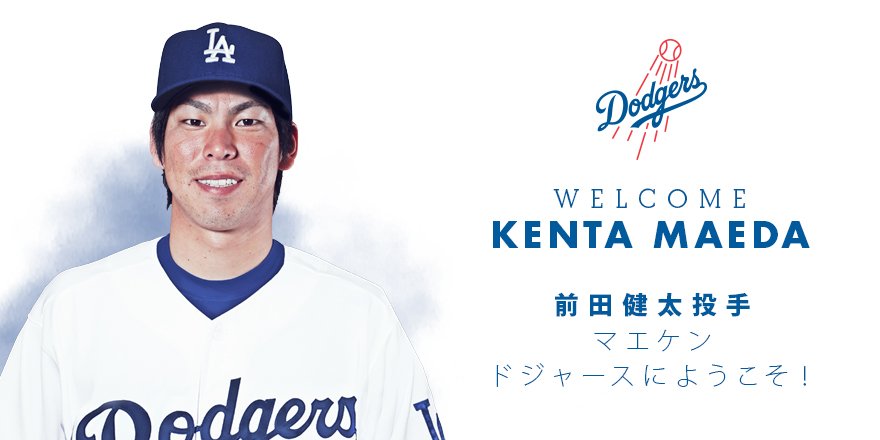
The Kenta Maeda Comparison

Los Angeles Dodgers/CBS Sports
Kenta Maeda, the Japanese ace who was posted by the Hiroshima Toyo Carp, recently signed an 8-year contract with the Dodgers in hopes of taking his talents to the States. While many Dodger fans are hoping he becomes the second coming of Yu Darvish or Masahiro Tanaka, the small right-hander does not come with same kind of hype, pure stuff, or gaudy numbers that the other two posted in the NPB, the highest level of pro ball in Japan. Maeda throws a low-90's fastball, to go with a cutter, sinker, slider, curve and changeup, and according to this article by Fangraphs, his off-speed stuff could very well be some of the best in baseball. It compares the movement on his slider to Giants reliever Sergio Romo, who relies on the slider as his bread and butter for getting K's, and the changeup to Phillies starter Aaron Nola, a young up-and-comer whose changeup is his best pitch. While many other sources will continue throwing out big name comps for the unknown commodity of Kenta Maeda, we will focus on another small right-handed starter as the ultimate comparison: Cardinals right hander Mike Leake.

Standing in at 6'0'', 154 lbs, Maeda's size does not exactly strike fear in opposing batters, neither does he tower over his teammates on the mound. But as the game of baseball shows, you don't need to be a certain height or weight to succeed, and a prime example is the undersized Mike Leake, who is just 5'10'' 190 lbs himself. Without very much height, it is difficult to generate elite velocity, and many of the shorter right handed pitchers succeed off of their wide pitch arsenal, as Leake and Maeda both throw 6 different pitches. Leake's repertoire consists of a low 90's fastball that sits around 88-92, faster on the four-seamer and a touch slower on the cutter, which he threw much more often in 2015, as well as a two-seam sinker that he threw the most, which was somehow faster than the four-seam. His two breaking balls are the curveball and the slider, both of which are above-average pitches, with his changeup as the only offering that was rated below-average in 2015. None of these 6 pitches generate too many swings and misses, but Leake is a ground ball machine, with a career 1.74 GB/FB ratio but just a 6.1 K/9 that was as low as 5.6 last season. 

Maeda's contact profile is similar, with just a 7.4 K/9 in Japan that likely will not translate against better competition. His fastball sits in a similar range as Leake, in the high 80's, low 90's and scraping 94 at times, and he can make it sink or cut as well, all within the same range. His primary breaking ball is the slider, which he throws around 81 mph, which is also the same velocity that Leake throws his slider. Maeda also throws another variation of his slider that many call a slow curve since he throws it much slower (around 72 mph) but it really is just a looser version of the same pitch. However, his best offspeed pitch might be the changeup, which he recently developed. It sits in the low-to-mid 80's and has very good tail and drop on his arm-side. (Click on the square below, if it doesn't work it comes from this link to a tweet from Baseball America's Ben Badler.)
The two right-handers also show very similar deliveries. Even though Maeda has the traditional Asian delivery where he pauses in his balance point, both of them share a pretty good stride length, with Maeda's being a bit farther simply because of his height. Leake does a sort of semi-circle with his stride while Maeda is more of a direct kick, but they end up with the same result. Their arm angles are similar as well, as shown below.
Both pitchers commanded big contracts in the off season, with Leake signing for 5 years, $75 million with the Cardinals and Maeda an incentive-laden 8 year deal with the Dodgers. Leake is obviously the more known commodity, with the Cards paying for his durability, consistency, and his ability to post an ERA under 4 while eating up 180 quality innings. While Maeda does have injury concerns, he should profile similarly to Leake, being a solid #3/4 starter who can throw strikes and induce weak contact, and that is what Los Angeles will be hoping from their new Japanese sensation.

Saturday, February 13, 2016

Road to the Show: Top End College Arms in the 2016 MLB Draft

As we near the beginning of the 2016 college baseball season, fans will be treated to the rises of some surprise players that will jump onto the national scene. Some will be freshman, the next crop of college baseball heroes and superstars. Who will be this year's J.J. Schwarz? The next Alex Lange? Others will be draft-eligible juniors who will shoot up draft boards, much like Andrew Benintendi last season. While we will eventually discover these breakout talents and cover them in future posts, today we will discuss the top two college arms in this year's draft, right-hander Alec Hansen of Oklahoma and University of Florida's A.J. Puk. This will be the second piece in Baseball MTJAG's draft coverage, the first of which covered the top two high school arms, which can be found here.

RHP Alec Hansen, University of Oklahoma
The first thing that stands out about Hansen is his size. He towers on the mound at 6'7'', and his over-the-top delivery gives his fastball a good downward plane. The overpowering fastball is his primary pitch, sitting in the 95-97 mph range and can reach triple digits, he blows the pitch by many college hitters, as evidenced by his 10.32 K/9 in 2015. The fastball is a true plus pitch, with scouts putting a 70, or even a 75 grade on it, and with that arm angle it is a very difficult pitch to catch up to. Scouts also like his slider, thrown at 85-87 with a nice tight break, as well as a 75-80 mph curveball that has good downward movement. As shown in his start against Texas this season (video below), even if those two breaking pitches are graded as plus, he doesn't throw them very often and prefers to live on his hard, four-seam fastball. The reliance on his big fastball has worked in college, but if he does not sharpen them up, pro hitters will eventually find a way to hit that pitch, especially with his below average command/control. While his fastball has gotten him high strikeout numbers in college, his inability to locate has held him back from being a great college pitcher and may stunt his development as a pro. His numbers have been short of stellar, as evidenced by the 3.95 ERA, 1.45 WHIP, and 4.83 BB/9. One reason for his command troubles may be his mechanics, which by being so tall he doesn't repeat very well. Often times the upper body moves forward before his lower body, leading to bad posture and occasionally moments where he looks like this:
As you may have guessed, it is quite difficult to throw strikes like that. He could use a bit more work on cleaning up his delivery and focusing on the follow through and bringing his back leg off the ground, as well as finishing more straight towards the plate instead of off to the left. Another way to have more effective pitch tunneling and spike strikeout numbers would be to use the 12-6 curve more often than the slider. With his delivery, it would make more sense to have a power curve that plays off the fastball than a slider, which would be an easier read out of the hand for the batter. An up-and-down moving pitch would be harder to react to than a side-to-side from an over-the-top guy like Hansen, so that could be a change of pitch selection he'd like to make since both breaking pitches are ranked as plus by scouts anyway. With his size, stuff, control issues, and lack of a defined follow through leg kick, Hansen reminds me of Ubaldo Jimenez, who given all his issues still became a solid starter in the big leagues and even had a couple ace-like seasons. If Hansen could make the proper adjustments with his command, mechanics, and pitch selection, he could be primed for a big year with Oklahoma, and have a shot at being taken first overall this June. 
Here is a video of his start against Texas, a program known for being scrappy and disciplined, in the spring of 2015. He would go on to throw 5.1 innings, walk 5, and strike out 5 while giving up 4 runs, all earned.

LHP A.J. Puk, University of Florida
A two-way player out of high school, Puk offers a strong left arm that can run a fastball up to the high-90's with a plus slurve and solid changeup. Like Hansen, he is 6'7'', and like Hansen, he also has command wobbles. However, Puk has had more success and a better track record against advanced competition, as he has thrown for Team USA and started for two years in the SEC whereas Hansen threw just 11 innings his freshman year at Oklahoma. Puk's fastball has very good velocity and some good movement as well, sitting 93-97 and can reach 98. His curveball is more like a slurve, it doesn't have great definition or sharp break/tilt, but it has good 2-8 movement and some depth to its curve. It plays off well from his fastball, and coming from the same pitch tunnel. He also throws a changeup that has the making of a plus pitch, and he's not afraid to throw any pitch in any count. By mixing and matching all three pitches effectively, Puk has dominated college competition to a 12.0 K/9 and 1.21 WHIP. While the 3.81 ERA is a tad high, it certainly isn't terrible, and his stuff bodes well for a transition to pro ball. His mechanics are pretty clean and he seems comfortable throwing with his big frame and all body parts in sync. He gets very good drive and explosion from his hips and lower body, which contributes to his high velocity. However, sometimes he overdoes it and flies open, yanking the ball into the dirt glove-side. He had a bit of trouble with this at Florida early on, but as he was pitching for Team USA and he was exposed to higher competition and more advanced coaching, he has controlled that a bit better and was able to dominate in his start against Cuba. Once the college season is underway, we will get to see if he has sharpened his command, and if he has, the rest of the SEC better watch out. Puk reminds me of Braves prospect Sean Newcomb, another big lefty with good velo, offspeed, and clean mechanics but still has command issues. Newcomb went off the board at 15th overall back in 2014, and Puk has a better track record and experience against higher competition, so watch for Puk to come off the draft board early on Day 1.